
Root Cause Analysis (RCA) is a problem-solving approach aimed at identifying the primary cause of a problem, ensuring that the issue is addressed at its source. By doing so, organizations can implement long-term solutions, enhance efficiency, lower costs, and improve customer satisfaction.
The RCA slide deck specifically focuses on the two most popular RCA tools: the 5 Whys and the Cause & Effect Diagram. The 5 Whys method involves repeatedly asking "why" to delve deeper into the root cause, while the Cause & Effect Diagram categorizes potential causes into areas like people, processes, and equipment, streamlining the identification of root causes.
This presentation provides participants with a thorough understanding of RCA and its practical applications. It highlights the significance of uncovering the root cause and guides the use of the 5 Whys and Cause & Effect Diagram as essential tools for problem-solving. Participants will also learn how to prioritize causes using Pareto Charts, focusing on the most significant issues first. Furthermore, the presentation addresses common pitfalls in RCA, emphasizing the importance of avoiding assumptions, engaging stakeholders, and treating RCA as an ongoing process. By the end of the session, participants will be equipped to effectively identify and resolve problems.
LEARNING OBJECTIVES
1. Grasp the importance of root cause identification in effective problem-solving.
2. Apply the 5 Whys and Cause & Effect Diagram to conduct practical RCA.
3. Prioritize root causes using Pareto Charts for more impactful problem-solving.
4. Recognize and avoid common pitfalls in RCA, with strategies for overcoming them.
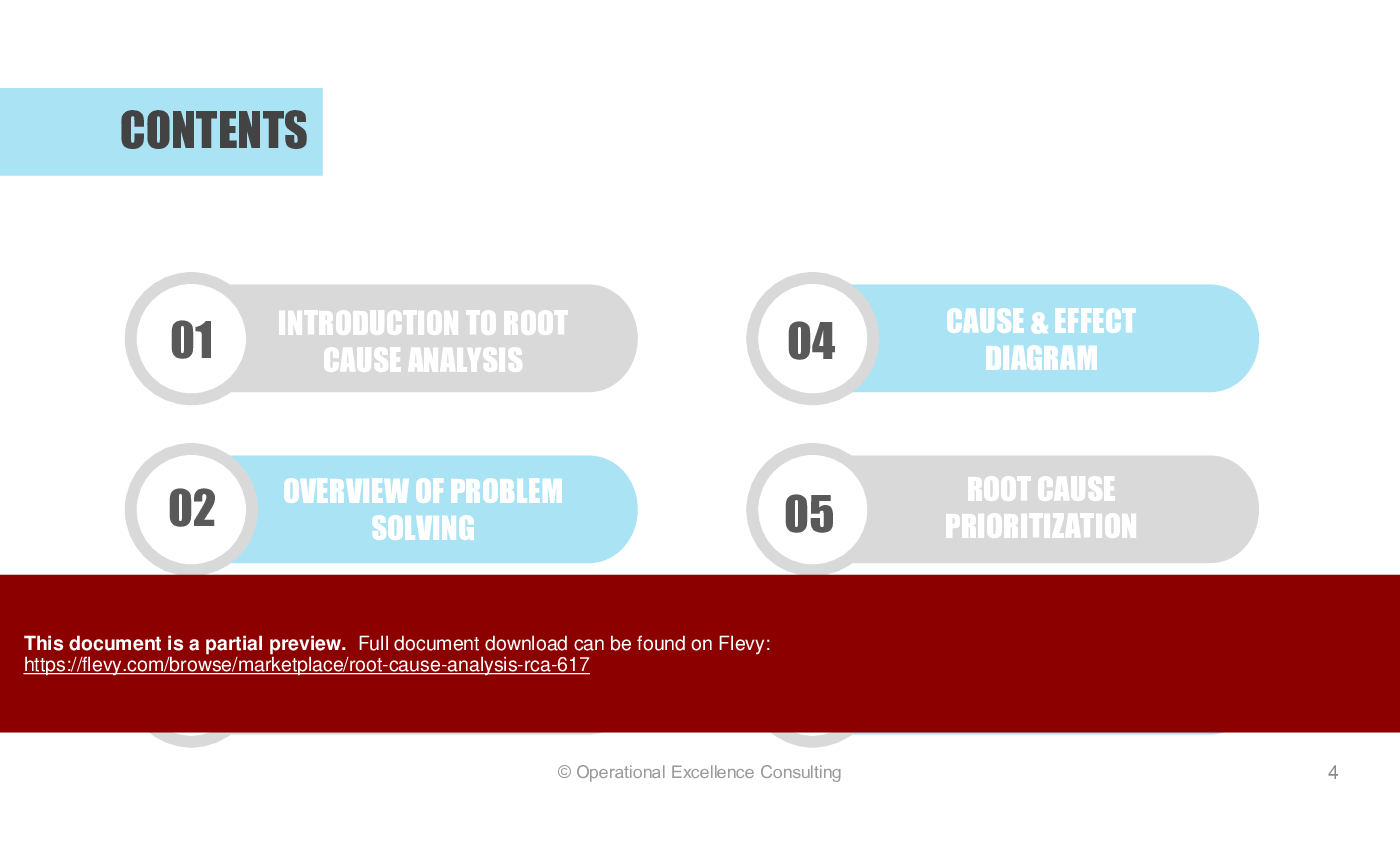
CONTENTS
1. Introduction to Root Cause Analysis
• What is Root Cause Analysis?
• What RCA Is Not
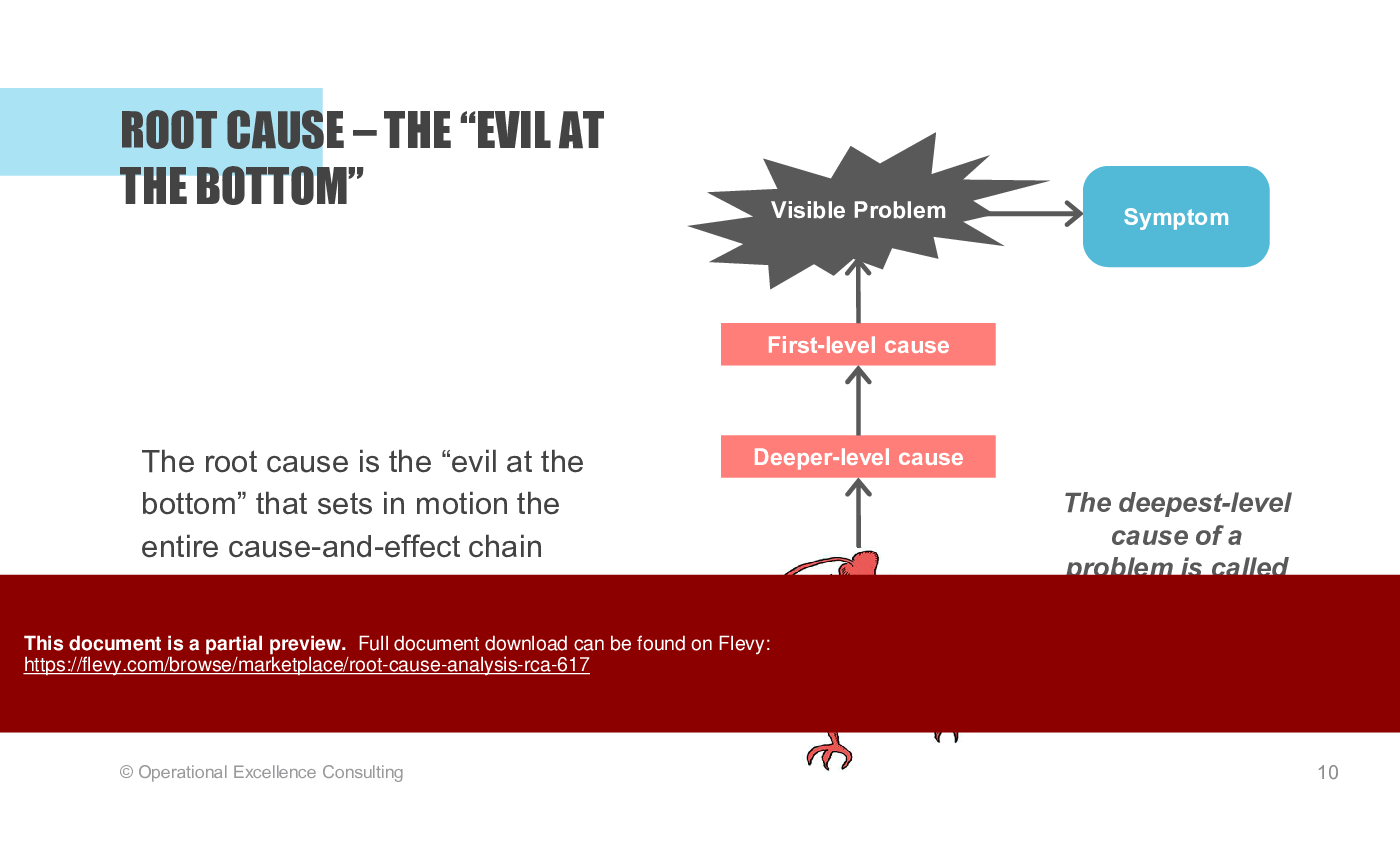
• Root Cause: The "Evil at the Bottom"
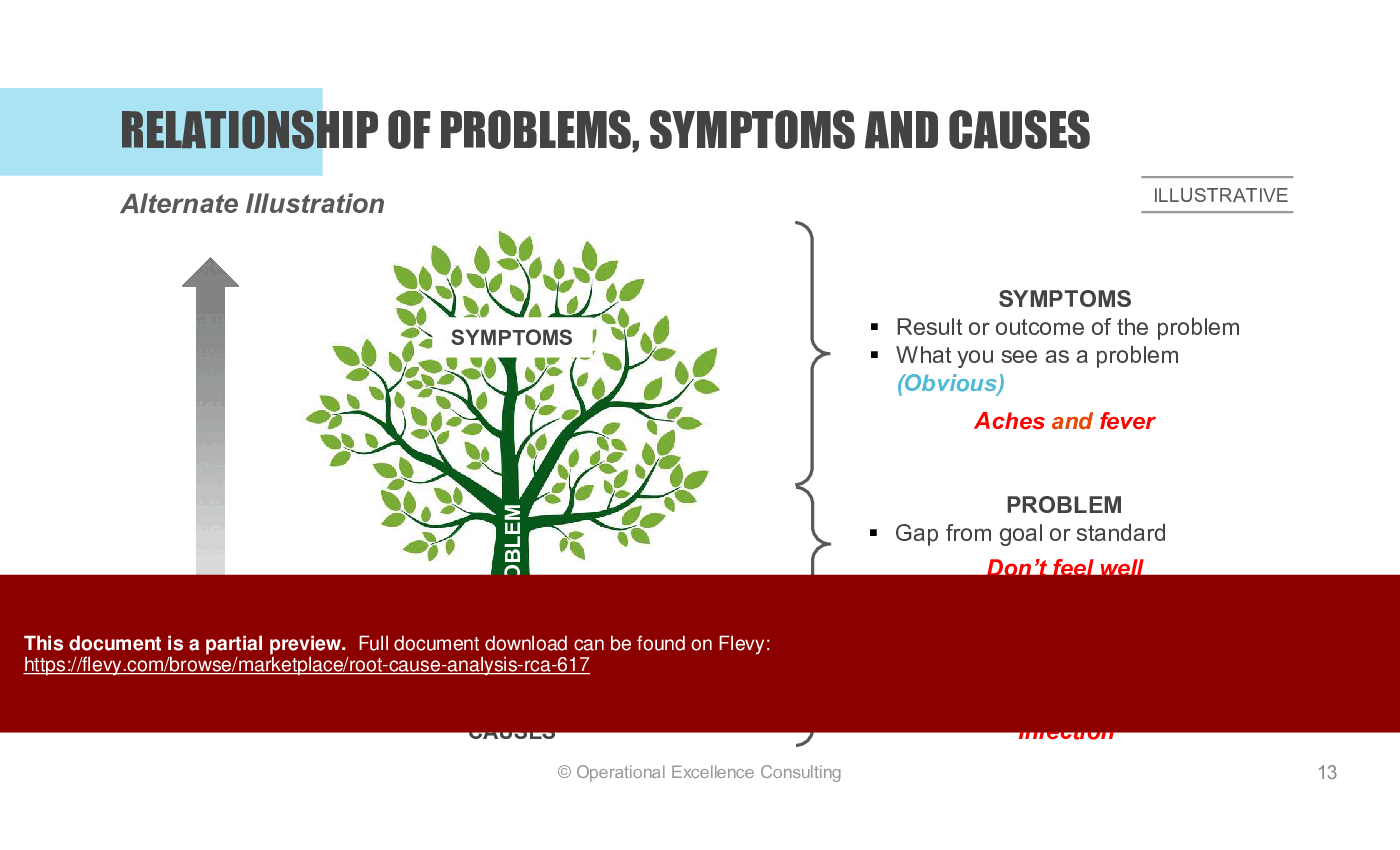
• Relationship of Problems, Symptoms and Root Causes
• Why Root Cause Analysis?
• Principles of Root Cause Analysis
• Applications of Root Cause Analysis
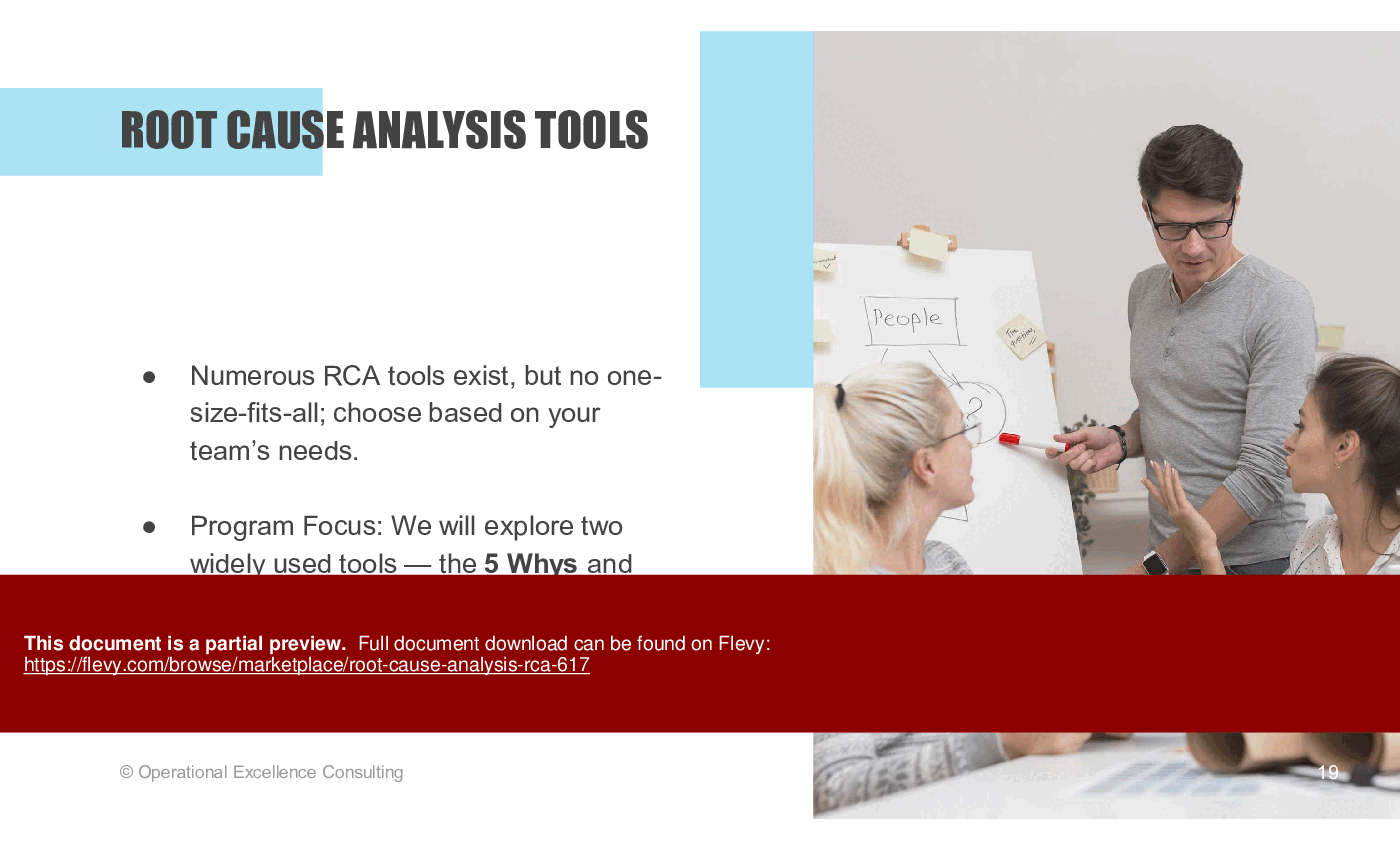
• Root Cause Analysis Tools
2. Overview of Problem Solving
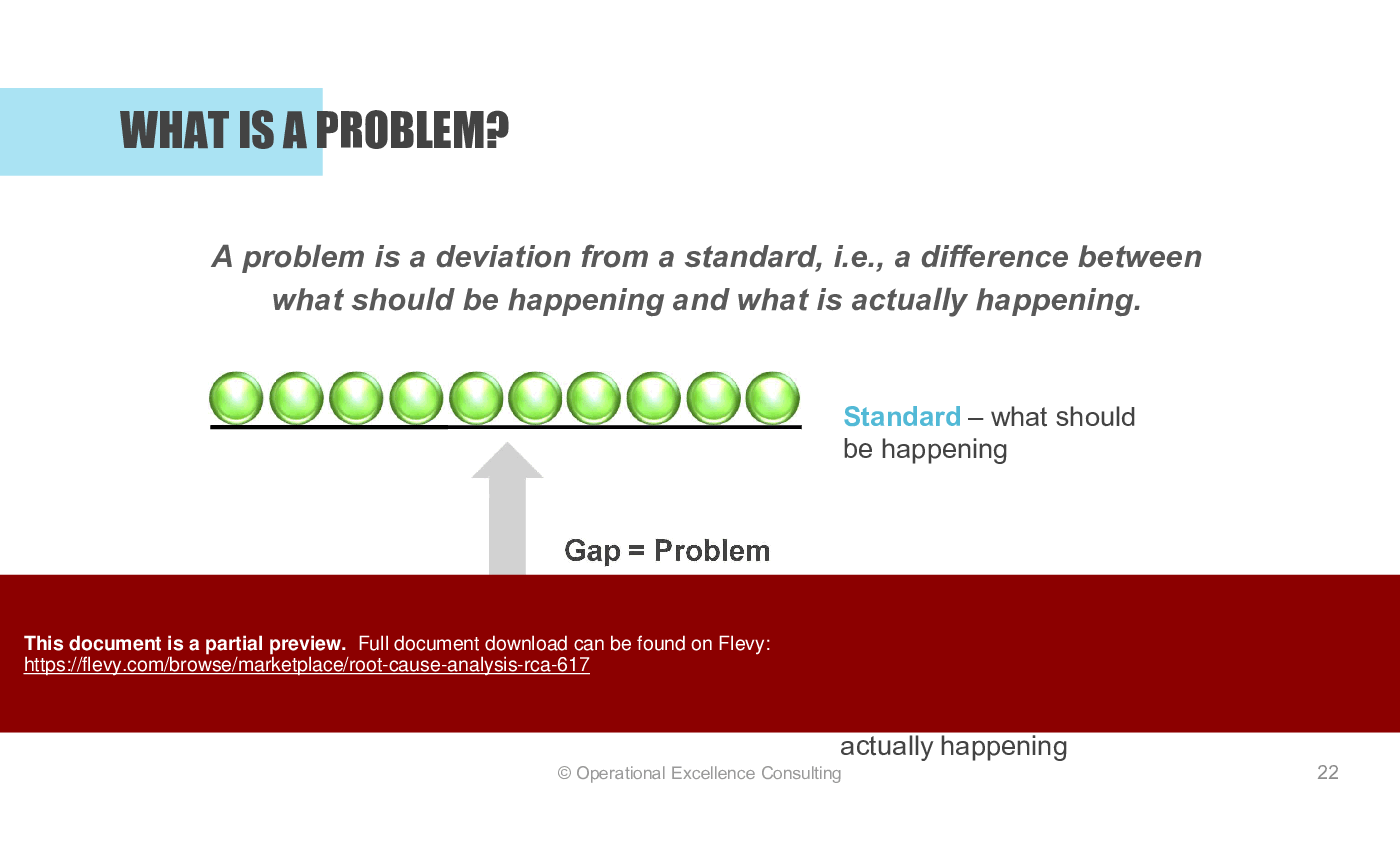
• What is a Problem?
• Problem Solving Funnel
• Key Problem Solving Methodologies
• PDCA Problem Solving Process
• A3 Problem Solving Process
• DMAIC Problem Solving Process
• 8D Problem Solving Process
• Bridging to Key RCA Tools
3. 5 Whys
• 5 Whys: Purposes
• 5 Whys: When to Use
• Examples of 5 Whys
• Completing the 5 Whys
• Drawbacks of the 5 Whys
• 5 Whys: Practical Tips
4. Cause & Effect Diagram
• Understanding 4M Analysis
• Cause & Effect Diagram: Purposes
• Cause & Effect Diagram: When to Use
• Cause & Effect Diagram (Manufacturing)
• Cause & Effect Diagram (Service)
• Examples of Cause & Effect Diagrams
• How to Construct a Cause & Effect Diagram
• Integrating 5 Whys with the Cause & Effect Diagram
• Checklists for the 5M1E
• Corrective Actions
• Cause & Effect Diagram: Practical Tips
5. Root Cause Prioritization​
• Pareto Chart: Purpose
• Pareto Chart: When to Use
• Pareto Chart Insights
• Pareto Chart: Data Collection
• Examples of Pareto Chart
• How to Construct a Pareto Chart
• Pareto Chart: Practical Tips
6. Effective RCA Practices
The presentation also examines the drawbacks of common RCA tools, ensuring a balanced understanding of their limitations. Participants will engage in practical activities to reinforce their learning and apply RCA techniques in real-world scenarios.
Got a question about the product? Email us at support@flevy.com or ask the author directly by using the "Ask the Author a Question" form. If you cannot view the preview above this document description, go here to view the large preview instead.
Executive Summary
The Root Cause Analysis (RCA) presentation is a powerful tool designed to enhance problem-solving capabilities within organizations. Developed by Operational Excellence Consulting, this presentation equips teams with the methodologies necessary to identify, eliminate, and prevent issues through structured analysis. Utilizing techniques such as the 5 Whys and Cause & Effect Diagrams, this presentation enables users to delve deep into the root causes of problems, ensuring sustainable solutions that drive operational excellence.
Who This Is For and When to Use
• Quality Assurance Teams focused on improving processes and reducing defects
• Operations Managers seeking to enhance efficiency and productivity
• Project Managers needing to address delays and issues in project timelines
• Continuous Improvement Teams implementing Lean methodologies
Best-fit moments to use this deck:
• During problem-solving workshops to analyze and address operational challenges
• In training sessions aimed at building RCA skills among team members
• When investigating recurring issues to prevent future occurrences
Learning Objectives
• Understand the critical role of identifying root causes in effective problem-solving
• Learn to prioritize root causes using Pareto Charts for impactful solutions
• Apply 5 Whys and Cause & Effect Diagrams for practical root cause analysis
• Recognize common pitfalls and strategies for overcoming them
• Develop a systematic approach to problem-solving using RCA techniques
• Foster a culture of continuous improvement within the organization
Table of Contents
• Introduction to Root Cause Analysis (page 5)
• Overview of Problem Solving (page 20)
• 5 Whys (page 33)
• Cause & Effect Diagram (page 45)
• Root Cause Prioritization (page 67)
• Effective RCA Practices (page 81)
Primary Topics Covered
• Introduction to RCA - RCA is a systematic approach to identifying the fundamental reasons for problems, aiming to implement effective and sustainable solutions.
• Problem Solving Overview - A methodical approach to identify, analyze, and resolve challenges using structured models like PDCA and DMAIC.
• 5 Whys Technique - A powerful tool for probing deeper into the root causes of a problem through iterative questioning.
• Cause & Effect Diagram - A visual tool that helps identify potential causes of a problem, facilitating comprehensive analysis.
• Root Cause Prioritization - Utilizing Pareto Charts to focus on the most significant issues for effective improvement efforts.
• Effective RCA Practices - Best practices for conducting RCA, including fostering diverse perspectives and avoiding blame.
Deliverables, Templates, and Tools
• RCA presentation template for training sessions and workshops
• 5 Whys analysis worksheet for structured questioning
• Cause & Effect Diagram template for visualizing relationships between causes and effects
• Pareto Chart template for prioritizing root causes
• Guidelines for effective RCA practices and common pitfalls to avoid
Slide Highlights
• Introduction slide defining Root Cause Analysis and its importance
• Visual representation of the 5 Whys process with illustrative examples
• Cause & Effect Diagram showcasing the 4Ms (Man, Method, Machine, Material)
• Pareto Chart demonstrating the 80/20 rule in root cause prioritization
• Effective RCA Practices slide emphasizing the importance of a systems thinking approach
Potential Workshop Agenda
Introduction to RCA (30 minutes)
• Overview of RCA principles and methodologies
• Discussion on the importance of identifying root causes
5 Whys Analysis (45 minutes)
• Hands-on activity to practice the 5 Whys technique
• Group presentations of findings and insights
Cause & Effect Diagram Workshop (45 minutes)
• Collaborative session to create Cause & Effect Diagrams for real-world problems
• Sharing of diagrams and discussion on potential solutions
Root Cause Prioritization (30 minutes)
• Introduction to Pareto Charts and their application
• Group activity to prioritize identified root causes
Customization Guidance
• Tailor the presentation to reflect specific organizational challenges and terminology
• Incorporate case studies relevant to the audience's industry for practical application
• Adjust the workshop agenda based on the team's familiarity with RCA techniques
Secondary Topics Covered
• Applications of RCA in various industries
• Common pitfalls in RCA and strategies to overcome them
• The role of employee engagement in effective RCA
• Continuous improvement practices related to RCA
FAQ
What is Root Cause Analysis?
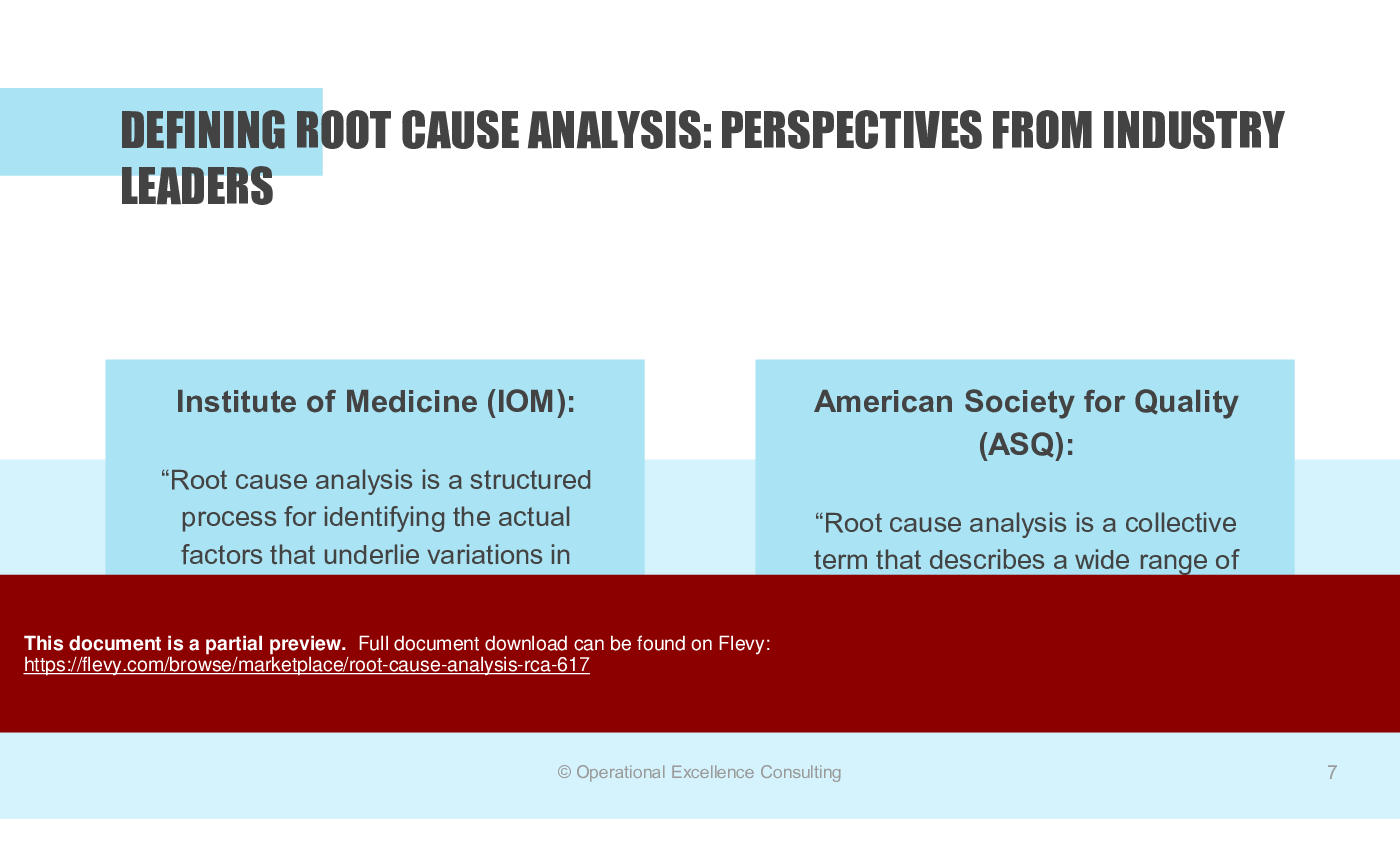
RCA is a systematic approach used to identify the underlying reasons for problems within a process or system, aiming to implement effective solutions.
When should I use the 5 Whys technique?
The 5 Whys technique is best used during post-incident analysis, process improvement projects, or immediate problem resolution to prevent recurrence.
How can I prioritize root causes effectively?
Utilize Pareto Charts to visualize contributions of various factors to a problem, allowing you to focus on the most significant issues for improvement.
What are some common pitfalls in RCA?
Common pitfalls include stopping at symptoms rather than identifying root causes, lack of team engagement, and failing to document findings systematically.
How can I ensure effective RCA practices?
Involve diverse perspectives, avoid assigning blame, and focus on evidence-based analysis to enhance the effectiveness of RCA.
What tools are available for RCA?
Key tools include the 5 Whys, Cause & Effect Diagrams, and Pareto Charts, each serving a unique purpose in the RCA process.
How can I foster a culture of continuous improvement?
Encourage open dialogue, empower employees to participate in RCA, and regularly review processes to identify areas for improvement.
Is RCA applicable in all industries?
Yes, RCA can be applied across various industries, including manufacturing, healthcare, finance, and service sectors, to address operational challenges.
What is the significance of the Pareto Principle in RCA?
The Pareto Principle highlights that a small number of causes often lead to the majority of problems, allowing teams to prioritize efforts effectively.
Glossary
• Root Cause Analysis (RCA) - A systematic approach to identifying the fundamental reasons for problems.
• 5 Whys - A technique that involves asking "Why?" multiple times to uncover deeper causes.
• Cause & Effect Diagram - A visual tool that maps out potential causes of a problem.
• Pareto Chart - A bar graph that represents the frequency of problems to prioritize issues.
• Continuous Improvement - Ongoing efforts to enhance products, services, or processes.
• Systems Thinking - An approach that considers the interactions and relationships within a system.
• Employee Engagement - Involving employees in decision-making processes to improve outcomes.
• Quality Assurance - A systematic process to ensure products and services meet specified requirements.
• Operational Excellence - A philosophy of leadership, teamwork, and problem-solving resulting in continuous improvement.
• Problem Solving - A methodical approach to identifying, analyzing, and resolving challenges.
• PDCA - Plan-Do-Check-Act; a four-step model for continuous improvement.
• DMAIC - Define-Measure-Analyze-Improve-Control; a data-driven improvement cycle used in Six Sigma.
• A3 Problem Solving - A structured problem-solving approach using a single A3-sized sheet of paper.
• 8D - Eight Disciplines; a problem-solving methodology focusing on team-based solutions.

• Quality Control - The process of ensuring products meet quality standards.
• Lean Methodology - A systematic method for waste minimization within a manufacturing system.
• Process Improvement - The proactive task of identifying, analyzing, and improving existing business processes.
• Defect - Any instance where a product or service fails to meet quality standards.
• Incident - An event that disrupts normal operations or poses a risk to safety or quality.
• Stakeholder - Any individual or group with an interest in the outcome of a project or process.
Source: Best Practices in Problem Solving, RCA PowerPoint Slides: Root Cause Analysis (RCA) PowerPoint (PPTX) Presentation Slide Deck, Operational Excellence Consulting
This document is available as part of the following discounted bundle(s):
Save %!
A3 Problem Solving Toolkit
This bundle contains 2 total documents. See all the documents to the right.
Save %!
Zero Defect (ZD) Quality Improvement
This bundle contains 3 total documents. See all the documents to the right.
Save %!
Lean Essentials for Shopfloor Improvement Training Package
This bundle contains 6 total documents. See all the documents to the right.
|
Receive our FREE whitepaper on the Top 101 Consulting Frameworks
Download our 200+ page guide summarizing the Top 101 Management Consulting Frameworks. Each framework provides a structured approach to analyzing and solving a common business problem. |